An analytics landing page has to answer a practical question: what decision will this help me make? DataFast connects its product to finding customers through marketing channels, then puts a website field and trial invitation in the same first-screen journey.
This teardown reviews the public homepage as observed on September 17, 2026. It separates useful patterns from changes worth testing. We did not create an account, measure conversions, or verify customer results.
- Keep
- The commercial benefit, trial reassurance, and product demonstration.
- Test
- Whether the main button should describe starting the trial.
- Verify
- The next screen and eventual activation, not just button clicks.
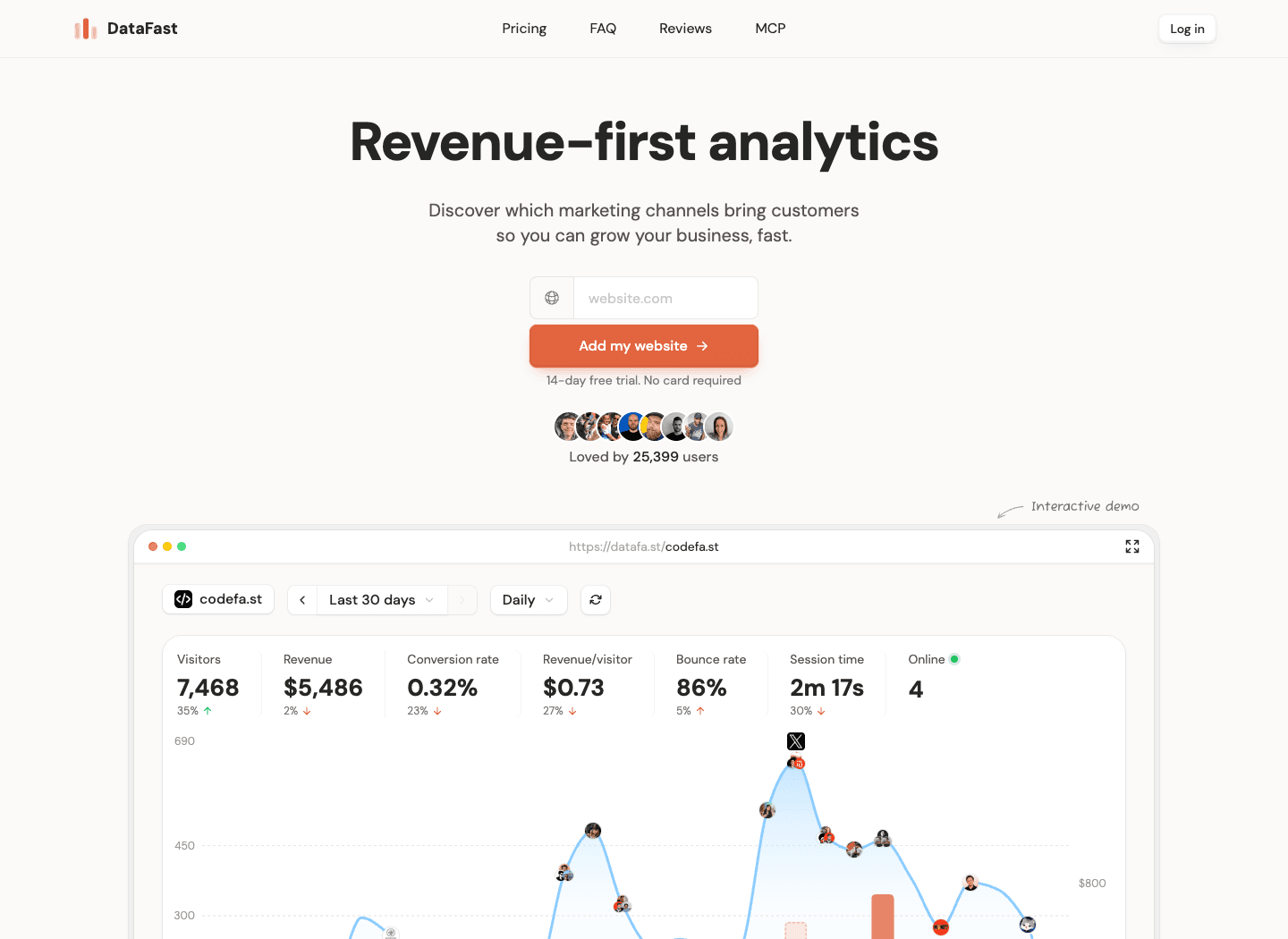
Unauthenticated public homepage review at 1440 × 1050. Desktop hero and visible demonstration inspected; signup, payment, mobile behavior, and commercial outcomes were not tested.
Keep the commercial question attached to the product
The hero names the analytics category and follows it with a customer-acquisition benefit. The lesson is the connection between what the software is and why someone would open it during a working day.
For your own page, write down the decision a visitor expects to make after using the product. If the headline can describe ten unrelated tools, use the supporting sentence to narrow that decision. Shortening copy is useful only while the essential meaning survives; fewer words alone are not evidence of better conversion.
Test the button against the actual next step
The first button says “Add my website”; nearby text explains the 14-day trial and that a card is unnecessary. The reassurance already exists. The open question is whether visitors understand that entering a domain begins a product signup journey.
A trial-led button is a reasonable hypothesis if it accurately describes the destination. Keep the domain field and trial conditions unchanged while checking comprehension. A persistent field label would also keep the requested information visible after typing replaces the placeholder.
CTA hypothesis — verify the destination before applying
Before
Add my website
Suggested change
Start my free trial
Proposed wording, not a shipped change or a measured improvement. Preserve the existing trial duration and card requirement.
Give the demonstration one job
The captured page introduces an interactive dashboard beneath the hero, with traffic and commercial metrics visible together. This gives visitors something concrete to inspect before committing.
On your page, pair product proof with a short task: find the answer to the question the hero just raised. Point to a relevant view only if that view actually exists. Preserve useful controls, make the demonstration recognizable as a demonstration, and avoid presenting its numbers as a forecast for the visitor’s business.
Validate comprehension before calling it a win
Ask a prospective user what they expect after the button, what they must provide, and when payment becomes relevant. Compare their answer with the real signup flow. Repair a mismatch before experimenting with visual emphasis.
Then follow trial starts through the first useful product action. More clicks with fewer activated users would be a weak result. This public-page review cannot establish that outcome, and it does not assign a conversion score.
Questions before you change it
Is this the same as the DataFast example audit?
No. This is a fresh editorial review of the September 17 homepage. The example audit promoted on our homepage reflects its own earlier evidence; its scores are not current homepage measurements.
Should every SaaS page say Start my free trial?
Only when a genuine trial is the next action. A demo request, account creation step, and immediate paid purchase need wording that matches their own commitment.
Did these suggestions increase DataFast conversions?
No outcome was measured. These are page observations and testable editorial suggestions, with no claim that DataFast implemented or endorsed them.
Make the next fix about your page.
Paste one public page to get a free audit preview. See the priorities, then decide whether to unlock the full report and implementation brief.